Leave Your Message
Choosing Oven Safe Plates in 2026 requires more than checking a product photograph. A glossy finish may look durable, yet it can hide weak thermal performance. The safest choice begins with the plate’s material, construction, and verified temperature rating. Porcelain, stoneware, tempered glass, and some ceramic blends behave differently under sudden heat changes. A cold plate placed inside a hot oven can crack without warning.
Materials scientist Mark Miodownik offers a useful principle: “Every material has a story, and its behavior depends on how it is used.” That idea matters here. An oven-safe label does not always explain whether the plate tolerates broilers, direct flame, freezer-to-oven transfer, or repeated heating. Read the manufacturer’s instructions carefully. Look for a stated maximum temperature, heating limitations, and care guidance. If those details are missing, pause before buying.
This guide examines how Oven Safe Plates perform in real kitchens. We will compare materials, rim designs, glazing, thickness, and resistance to thermal shock. A thick stoneware plate may hold heat beautifully. It may also feel heavy and chip at the edge. Tempered glass can offer clear visibility. It still needs careful handling after heating.
Some choices remain imperfect.
I have learned that convenience can encourage risky assumptions. “Oven safe” should never mean “safe for every heat source.” Reliable selection combines product evidence, practical experience, and cautious use. The best plate is not simply attractive or highly rated. It is suitable for your oven, recipes, cooking temperature, and daily habits.
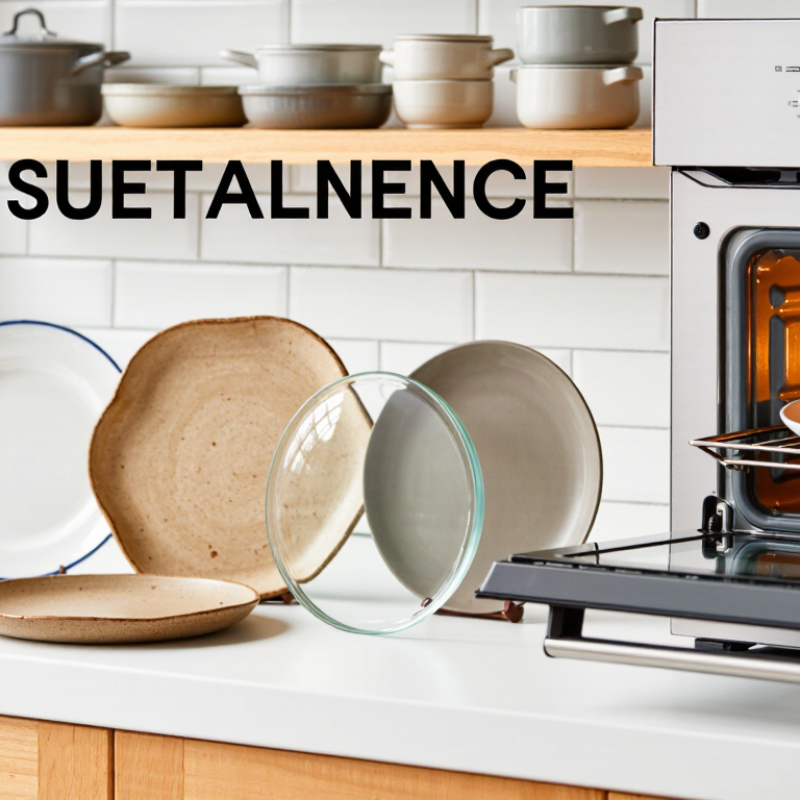
How to Choose Oven Safe Plates in 2026?
“Oven-safe” should mean more than a printed symbol. EN 13834 provides a technical framework for evaluating ovenware used in domestic ovens. Its thermal-resistance testing examines how a plate withstands controlled heating, cooling, and sudden temperature changes. Inspectors look for cracking, warping, surface damage, and loss of function after testing. The standard is useful, but it does not automatically certify every plate sold as oven-safe.
A reliable buyer should request the manufacturer’s EN 13834 test report or declaration of conformity. Check the tested temperature range, heating method, cooling conditions, and maximum permitted use. A plate that survives gradual heating may still fail when moved from a refrigerator into a hot oven. That mistake is common. I have also seen product descriptions use “heat-resistant” without stating any test method, which is not enough evidence.
The European Commission’s 2024 Safety Gate report recorded 4,137 product alerts across consumer categories. This figure reinforces the value of traceable testing and clear instructions. Independent laboratory results should identify the sample, test date, laboratory, and observed defects. The report should also explain whether repeated thermal cycles were included. One practical detail matters: avoid thermal shock during daily use. Do not place a cold plate into a fully heated oven unless the test documentation specifically supports it. Even certified cookware can fail when users ignore temperature limits.
A practical comparison guide for evaluating plate materials, thermal-resistance information, and product documentation before oven use.
| Plate Material | Typical Heat Performance | Thermal-Shock Risk | EN 13834 Relevance | Evidence to Check | Recommended Use Guidance |
|---|---|---|---|---|---|
| Vitrified ceramic | Generally high Dense, fired ceramic can tolerate normal oven heating when the item is specifically designed and marked for oven use. |
Medium Sudden changes from a hot oven to a cold or wet surface may cause cracking or breakage. |
Relevant when the item is marketed as ovenproof cookware or oven-use tableware and has been assessed under the applicable standard scope. | Oven-use symbol or wording, maximum temperature, manufacturer instructions, and documentation identifying the tested product or product family. | Place in a preheated oven only if instructed. Avoid direct contact with a heating element, stovetop burner, or cold water. |
| Stoneware | Generally high Suitable for many baking applications when the body, glaze, and construction are designed for oven heating. |
Medium Thick sections and moisture inside the body can increase cracking risk during rapid temperature changes. |
Useful for verifying that thermal-resistance and safety requirements were considered for the complete item, not just the raw material. | Clear oven-safe claim, temperature limit, care instructions, and confirmation that decorative coatings are suitable for oven exposure. | Do not move directly between freezer, refrigerator, or cold countertop and a hot oven unless the instructions specifically allow it. |
| Porcelain | Product-dependent Some porcelain plates are ovenproof; ordinary serving porcelain should not be assumed to be oven-safe. |
Medium Thin bodies may heat quickly, but glaze defects, damage, or sudden cooling can still cause failure. |
Check whether the specific plate is covered by an ovenproof-cookware declaration rather than relying on the word “porcelain.” | Oven-safe marking, stated temperature range, absence of metallic decoration, and instructions covering preheating and cooling. | Use only within the stated limit. Do not use plates with chips, hairline cracks, or deep scratches for oven heating. |
| Tempered soda-lime glass | Product-dependent Tempered glass may be suitable for oven use, but the rating applies only to the tested design and stated conditions. |
High sensitivity Glass can fail from thermal shock, impact damage, uneven heating, or contact with a cold surface. |
Thermal-shock performance is especially important. The product documentation should identify the applicable test basis and use limitations. | Oven-safe symbol, maximum temperature, thermal-shock instructions, warning against damaged glass, and restrictions on stovetop or broiler use. | Never place hot glass on a wet or cold surface. Do not use if chipped, scratched, cracked, or exposed to a sudden temperature change. |
| Borosilicate glass | Generally high Its lower thermal-expansion behavior can improve thermal-shock resistance, but it is not automatically oven-safe. |
Medium Material type reduces some thermal stress, but uneven heating, impact, and rapid cooling remain hazards. |
EN 13834-style evaluation should still be confirmed for the finished item, including its shape, thickness, rim, and any attached components. | Finished-product oven rating, maximum temperature, thermal-shock instructions, and confirmation that the item is not intended for direct flame. | Follow the product’s temperature and cooling instructions. Avoid placing the hot plate on stone, metal, or a wet surface unless permitted. |
| Aluminium or stainless steel | Generally high Metal plates usually withstand oven temperatures, subject to coatings, handles, seals, and decorative parts. |
Generally lower Metals conduct heat efficiently, but thin sections may deform and non-metal parts may have lower limits. |
Confirm that the complete product is covered. EN 13834 assessment may be unsuitable as the sole reference if the item is not household oven cookware within the standard’s scope. | Maximum temperature for the complete assembly, coating limitations, handle material, dishwasher guidance, and warnings about sharp or hot edges. | Use oven mitts and allow the item to cool before washing. Check whether non-stick coatings or bonded components have separate limits. |
| Melamine or other thermoset plastic | Not normally suitable These materials are commonly intended for serving, not conventional-oven heating. |
High risk Heat can cause warping, surface damage, discoloration, or migration concerns depending on the material and conditions. |
Do not treat a general food-contact declaration as proof of oven safety. A product must be specifically designed and documented for oven use. | Explicit oven-safe claim from the manufacturer. “Microwave-safe,” “dishwasher-safe,” or “food-safe” does not establish oven safety. | Keep out of conventional ovens unless the product instructions expressly permit oven use at a stated temperature. |
| Plate with metallic decoration | Decoration-dependent The base material may tolerate heat while gold, silver, luster, paint, or bonded trim may not. |
Medium Different materials can expand at different rates and may crack, discolor, detach, or create hot spots. |
Check the tested configuration, including decoration and coatings. A plain version of the same plate does not automatically validate a decorated version. | Specific oven-use instructions, decoration limitations, maximum temperature, and microwave restrictions where applicable. | Do not use in an oven unless the decorated product is expressly rated for that use. Never assume microwave-safe means oven-safe. |
Important: EN 13834 is a cookware standard for ovenproof cookware used in conventional ovens; it is not a universal permission to heat every plate. Confirm that the exact product category and configuration fall within the applicable standard scope. Temperature limits, test conditions, and acceptance criteria must be taken from the applicable edition of the standard and the product’s own instructions. “Microwave-safe,” “dishwasher-safe,” and “food-contact-safe” do not by themselves prove oven safety.