How to Source Vintage Dinnerware Sets for Wholesale Buyers
Sourcing Vintage Dinnerware Sets for wholesale requires more than finding attractive patterns. Buyers must balance design appeal, supply consistency, condition, and customer safety. A floral transferware plate may look perfect online, yet reveal hairline cracks under warehouse lighting. A maker’s mark can support authenticity, but it does not guarantee quality. Careful sourcing begins with clear product standards and realistic purchasing goals.
Reliable buyers inspect supplier photographs, request measurements, and ask for detailed condition reports. They compare auction records, estate-sale inventories, and established dealer references. Glaze condition deserves close attention. Crazing, discoloration, repairs, and sharp chips can reduce resale value or create customer concerns. Where appropriate, buyers should request professional testing information for older ceramic glazes. Requirements may vary by destination market. Check them carefully.
Packaging also matters. Vintage pieces need separators, cushioning, and moisture-resistant cartons. One damaged shipment can erase the profit from several successful orders. Experienced wholesalers often begin with a small test purchase before committing to larger volumes. This exposes weak packing, inconsistent grading, or inaccurate inventory counts. It is not foolproof. Even careful buyers can overlook subtle repairs or mixed patterns. That uncertainty deserves honest pricing and transparent product descriptions.
The strongest sourcing strategy combines historical knowledge with practical warehouse discipline. Buyers should record supplier names, purchase dates, pattern details, defects, and test results. These records support repeat purchasing and help resolve disputes professionally. Vintage goods are rarely perfectly uniform. That is part of their character, but also their commercial risk. A thoughtful wholesaler protects both authenticity and customer trust.
Define Vintage by Age, Maker, Pattern, and Provenance Standards
How to Source Vintage Dinnerware Sets for Wholesale Buyers
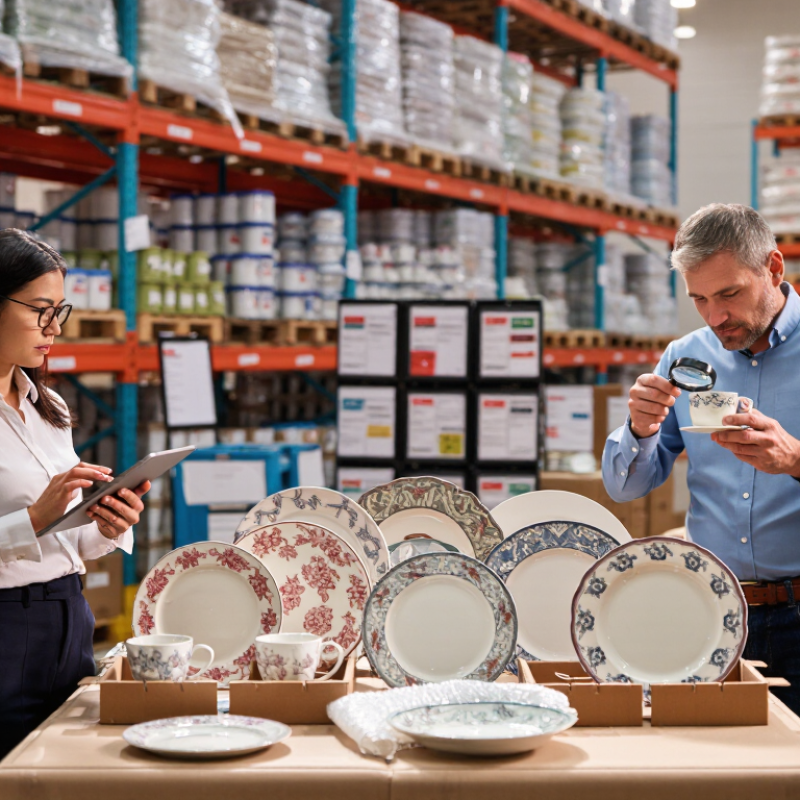
For wholesale buyers, “vintage” needs a documented definition. Age alone is not enough. I use a practical range of roughly 20 to 100 years, then verify the period through maker marks, construction, and pattern history. Backstamps may show a factory location, production method, or changing letter style. The pattern matters too. Repeated motifs, glaze texture, hand-painted variation, and original shapes can support a date estimate. Provenance adds context, such as an estate inventory, auction record, or detailed seller history. None is perfect evidence.
Tips: Ask suppliers to photograph every backstamp and representative flaw. Request measurements, piece counts, and replacement availability. Separate confirmed dates from informed guesses in your inventory sheet. Inspect rims, handles, crazing, staining, and hairline cracks under bright, neutral light. A charming mismatch can sell well, but it should never be hidden in the listing. Check local food-contact requirements before presenting pieces for active serving. Keep invoices and provenance notes together.
A reliable wholesale standard also defines condition grades. “Excellent” should mean more than clean photographs. I compare descriptions against physical samples and record the inspection date. Small manufacturing irregularities may be acceptable, while structural damage usually changes the resale category. I once accepted a set with convincing marks but weak provenance; the dating remained uncertain. That mistake taught me to price uncertainty openly. Buyers trust clear limitations, especially when each set contains different plates, bowls, or cups. A consistent checklist makes sourcing slower, but more defensible.
Measure Demand Using ThredUp’s 2023 Resale-Market Growth Data
Vintage dinnerware sourcing should begin with demand evidence, not attractive patterns. ThredUp’s 2023 Resale Report projected the global secondhand apparel market would reach $350 billion by 2027. It also forecast the U.S. resale market would double by 2027, reaching $70 billion. These figures concern clothing, not tableware. Still, they reveal stronger consumer acceptance of pre-owned goods and circular purchasing.
Use that signal carefully. Track searches, saves, and completed sales for floral plates, colored glass, and mid-century serving pieces. Compare results across 30-day periods. A small test order may expose real demand better than broad market enthusiasm. Keep each pattern family under 15% of the opening inventory. That limits risk when nostalgia proves weaker than expected.
The 2023 Global Resale Report also projected online resale could reach $38 billion by 2027. For wholesale buyers, this supports testing vintage sets through digital channels before deeper purchasing. Photograph surface wear beside a ruler. Record diameter, piece count, maker marks, chips, and staining. Buyers often accept minor age marks, but they dislike vague descriptions. Price complete four-person sets separately from mixed lots. I would not treat resale growth as proof that every vintage style will move. That assumption needs correction. Demand can rise while one warehouse remains full of unsold amber tumblers.
Screen Suppliers Through MOQ, Condition Grades, and 95% Inspection Targets
Wholesale buyers should treat vintage dinnerware sourcing as a controlled screening process, not a treasure hunt. Ask each supplier for MOQ, condition definitions, packing methods, and recent inspection records. A low MOQ can help test demand, but it may raise unit cost or limit pattern consistency. Request samples from the same inventory group. A showroom sample can hide warehouse variation. Good suppliers explain whether Grade A means no chips, light glaze wear, or simply resale-ready appearance. Terms differ widely. Put every grade in writing, with photos of rims, bases, and hairline cracks.
Tips: Build a comparison sheet with MOQ, grade, defect allowance, replacement policy, and lead time. Inspect ten sample pieces, including plates, bowls, and cups. Photograph each flaw beside a ruler. This feels slow. It prevents expensive assumptions.
Set a 95% inspection target before placing a wholesale order. For a 500-piece shipment, inspect at least 475 pieces using a documented checklist. Check chipped edges, stains inside cups, unstable bases, faded decoration, and mismatched sizes. Count packed units again before sealing cartons. Ask suppliers to separate acceptable vintage wear from damage affecting use or presentation. A third-party inspection can improve confidence when distance limits direct visits. Still, 95% is a target, not proof of perfection. Clean samples can be followed by inconsistent cartons. Keep a small tolerance budget and negotiate remedies before payment. Reliable sourcing comes from repeatable evidence, not attractive photographs.
How to Source Vintage Dinnerware Sets for Wholesale Buyers
Screen suppliers using practical benchmarks for minimum order quantity, condition-grade mix, and inspection performance before placing a wholesale order.
Screening guide: Prioritize suppliers offering a minimum order quantity of 100 sets, at least 60% Grade A pieces, no more than 35% Grade B pieces, and a maximum 5% damaged or unacceptable rate after inspection. The 95% inspection target means that at least 95 out of every 100 pieces should be checked before shipment.
Verify Food Safety Against FDA Ceramicware Lead and Cadmium Limits
How to Source Vintage Dinnerware Sets for Wholesale Buyers
Vintage dinnerware can look charming, but appearance does not confirm food safety. Lead and cadmium may remain in decorative glazes, painted rims, or worn surfaces. For wholesale sourcing, inspect every pattern and production period carefully. Crazing, chips, and fading deserve extra attention. They can expose food to unstable glaze areas.
FDA ceramicware requirements focus on lead and cadmium migration, not only their presence. Limits vary by item type, such as flatware, cups, mugs, and hollowware. There is no single pass-or-fail number for every plate. Ask an independent laboratory to test representative samples using methods aligned with current FDA criteria. Test the eating surface, rim, and interior glaze. Mixed patterns need separate evaluation.
Keep the paperwork.
A reliable supplier should provide test reports, sample identification, test dates, and laboratory details. Match each report to the exact vintage design and production lot. Do not accept a report for a similar-looking item. I have seen sourcing teams rely too heavily on visual checks, then discover that a bright rim contained a different glaze formulation. That mistake is easy to repeat. Re-test when items show unusual wear, come from uncertain sources, or lack traceable records. If results are unclear, pause the wholesale purchase and obtain technical advice before offering the dinnerware for food use.