Leave Your Message
Christmas Home Decor is entering 2026 with a sharper focus on value, emotion, and responsible design. Global buyers are no longer choosing ornaments only for appearance. They are examining material quality, packaging, durability, and seasonal resale potential.
Market signals support this shift. The National Retail Federation forecast 2024 holiday sales between $979.5 billion and $989 billion in the United States. That scale shows strong seasonal demand, even when shoppers remain price-conscious. Deloitte’s 2024 Holiday Retail Survey reported planned household holiday spending of about $1,778. Buyers still spend, but they expect clearer value. These findings matter for importers, retailers, and private-label brands planning 2026 collections.
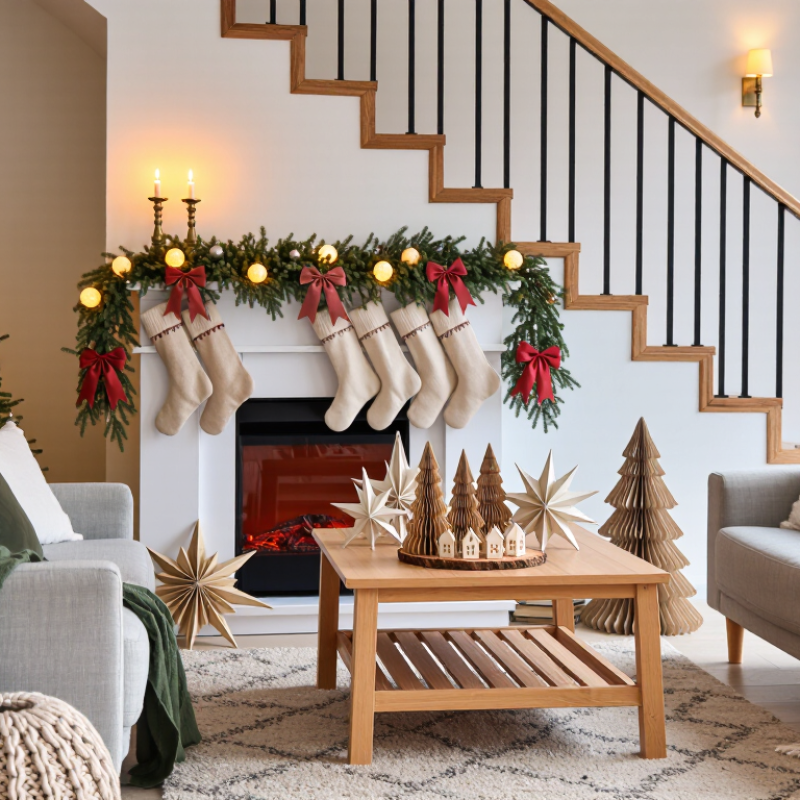
Warm neutrals are gaining attention. Think cedar green, candlelight cream, muted red, and brushed brass. Reusable fabric stockings may replace thin synthetic versions. Tabletop displays could feature natural wood, paper textures, and hand-finished details. Small spaces need more adaptable products, such as foldable trees, stackable villages, and battery-powered lighting. Practicality sells quietly.
It is not enough to copy last year’s trends. That approach may fail.
Pinterest trend reporting and Etsy’s seasonal seller insights often show early interest in handmade textures, nostalgic styling, and personalized gifts. However, prediction reports are signals, not guarantees. Regional taste, climate, religious traditions, and shipping costs can change demand quickly. Successful Christmas Home Decor strategies should combine trend research with buyer interviews, product testing, and transparent supplier records. This guide explores the strongest 2026 opportunities while questioning which fashionable ideas can survive real homes, real budgets, and real holiday pressure.
2026 Christmas home decor will be shaped by cautious spending, practical beauty, and smaller spaces. The National Retail Federation forecasts $979.5–989 billion in U.S. holiday sales for 2026. This range signals strong demand, but not unlimited confidence. It is a market estimate, not a guarantee.
For global buyers, the forecast supports flexible collections. Think warm white lighting, natural wood, textured linen, and reusable ornaments. Compact wreaths and foldable tabletop trees may suit urban homes. Adobe Analytics recorded $241.4 billion in U.S. online holiday sales during November and December 2024. That figure shows why clear product photos, shipping details, and accurate dimensions matter. A 30-centimeter centerpiece should look 30 centimeters in a buyer’s room.
Color choices may move toward deep green, muted red, aged gold, and soft clay. Yet trend reports can overstate speed. Shoppers may prefer familiar decorations when household budgets feel pressured. Circana’s consumer research repeatedly highlights value sensitivity across discretionary categories. Buyers should test smaller quantities before committing to large seasonal orders. Candle holders, ribbon sets, and cushion covers offer lower-risk entry points. Some styling advice will fail in different cultures. Red may suggest celebration in one market and caution in another. Packaging, sizing, and material claims also need careful local review.
| Market Dimension | 2026 Buyer Trend or Reference Data | Preferred Product Direction | Global Buyer Relevance | Demand Signal | Key Sourcing and Compliance Considerations |
|---|---|---|---|---|---|
| Holiday Market Benchmark | US$979.5–989.0 billion in total U.S. holiday retail sales, representing a 2.5%–3.5% year-over-year forecast increase. | Use the figure as a broad seasonal retail benchmark rather than a Christmas-decor-only market size. | Useful for planning inventory, shipping capacity, and seasonal cash flow for the U.S. market. | High | The range is a U.S. holiday-sales forecast and should not be presented as a global or home-decor-only forecast. |
| Online and Non-Store Sales | US$295.1–300.7 billion in forecast online and non-store holiday sales, with expected growth of approximately 8%–9%. | Prioritize lightweight products, protective packaging, clear product photography, and parcel-friendly dimensions. | Supports cross-border e-commerce and direct-to-consumer seasonal purchasing. | High | Provide accurate carton dimensions, gross weight, country-of-origin information, and multilingual care instructions. |
| Warm Minimalism | Neutral foundations combined with warm red, amber, forest green, and natural wood tones. | Simple ceramic houses, linen-look table runners, wood ornaments, matte finishes, and restrained metallic accents. | Works across contemporary, farmhouse, Scandinavian-inspired, and compact urban interiors. | High | Keep color batches consistent and test coatings, paints, and finishes for durability and odor. |
| Natural and Tactile Materials | Growing preference for visible texture and materials associated with natural interiors, including wood, paper, rattan, jute, linen, and stone-like finishes. | Woven ornaments, paper stars, wood trees, jute accents, and textured candle holders. | Natural textures photograph well online and can support premium positioning without complex electronics. | High | Control moisture, mold, splintering, fiber shedding, flammability, and packaging protection during international transport. |
| Sustainable and Reusable Decor | Buyers increasingly seek durable products, reduced packaging, recycled content, repairability, and multi-season use. | Flat-pack ornaments, reusable gift-wrap accessories, refillable displays, and plastic-reduced packaging. | Helps address sustainability requirements in European, North American, and other regulated markets. | High | Substantiate recycled-content claims, separate materials where possible, and avoid unsupported environmental claims. |
| Compact and Multifunctional Products | Smaller living spaces and higher delivery costs favor products that fold, stack, store easily, or serve more than one purpose. | Foldable trees, stackable village displays, reversible table décor, and ornaments that also function as gift tags. | Improves storage efficiency for households, retailers, and importers while reducing shipping volume. | High | Measure packed and assembled dimensions separately; verify hinges, magnets, adhesives, and repeated-use durability. |
| Personalization and DIY | Custom names, dates, family references, and craft-style finishing continue to support emotional and gift-oriented purchases. | Blank wooden ornaments, paintable ceramic pieces, modular name plaques, and customizable stockings. | Allows buyers to create localized collections without changing the core product structure. | Medium–High | Offer standardized character sets, proofing procedures, low minimum order quantities, and clear personalization cut-off dates. |
| Soft Lighting and Ambient Display | Warm, low-glare lighting remains suitable for relaxed seasonal interiors and evening display settings. | Battery-operated micro-light décor, lantern-style ornaments, illuminated village scenes, and warm-white tabletop displays. | Suitable for homes, hospitality spaces, window displays, and gift-oriented seasonal merchandising. | High | For electrical products, confirm applicable safety testing, battery transport requirements, insulation, overheating protection, and labeling. |
| Indoor–Outdoor Flexibility | Products designed for more than one setting can extend the seasonal use period and broaden retail placement. | Weather-resistant wreaths, porch signs, balcony ornaments, and transitional décor suitable for indoor use. | Supports markets with different housing types, climates, and holiday display traditions. | Medium–High | Specify the intended environment; test UV exposure, moisture resistance, rust prevention, and temperature tolerance. |
| Regional Adaptability | Christmas décor preferences vary by climate, housing style, cultural practice, color preference, and available storage space. | Use modular collections with interchangeable colors, symbols, sizes, and packaging language. | Enables one core collection to serve North American, European, Middle Eastern expatriate, and Asia-Pacific buyer segments with localized variations. | High | Check local labeling, language, plug and voltage requirements, fire-safety rules, and import documentation before production. |