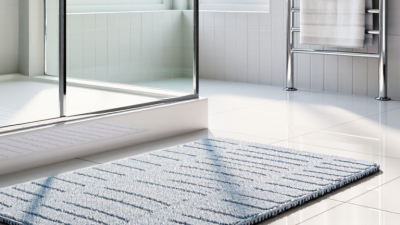
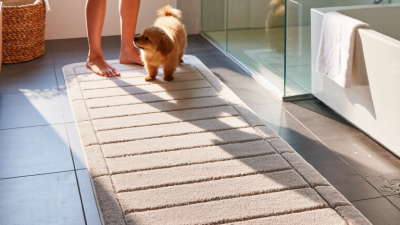
How to Choose the Best Fast Drying Bath Mat
A bathroom mat faces a simple but demanding job: absorb splashes, feel steady underfoot, and dry before the next shower. Choosing a Fast Drying Bath Mat is not only about picking the softest fabric. Material, thickness, backing, ventilation, and washing instructions all affect how it performs in a real bathroom. Small details matter.
Moisture deserves attention. The U.S. Environmental Protection Agency advises keeping indoor humidity below 60%, ideally between 30% and 50%, to help limit dampness problems. A mat cannot control room humidity, but one that releases moisture quickly may be easier to keep fresh. A 2011 Journal of Safety Research analysis estimated 234,094 bathroom-related injuries among U.S. adults aged 15 and older were treated in emergency departments in 2008. That finding does not prove a bath mat prevents falls. It does make grip, stability, and placement worth checking carefully.
This guide compares common materials, from washable microfiber to firm stone-style mats, and explains their trade-offs. It also looks at absorbency, drying time, non-slip backing, floor compatibility, and care requirements. A mat may dry quickly in a ventilated room yet stay damp on a crowded floor. That’s easy to overlook. No single material suits every household, and “quick-drying” claims can be difficult to compare without consistent testing. Use the product’s care label and measurements, then consider your bathroom’s airflow and floor surface before buying.
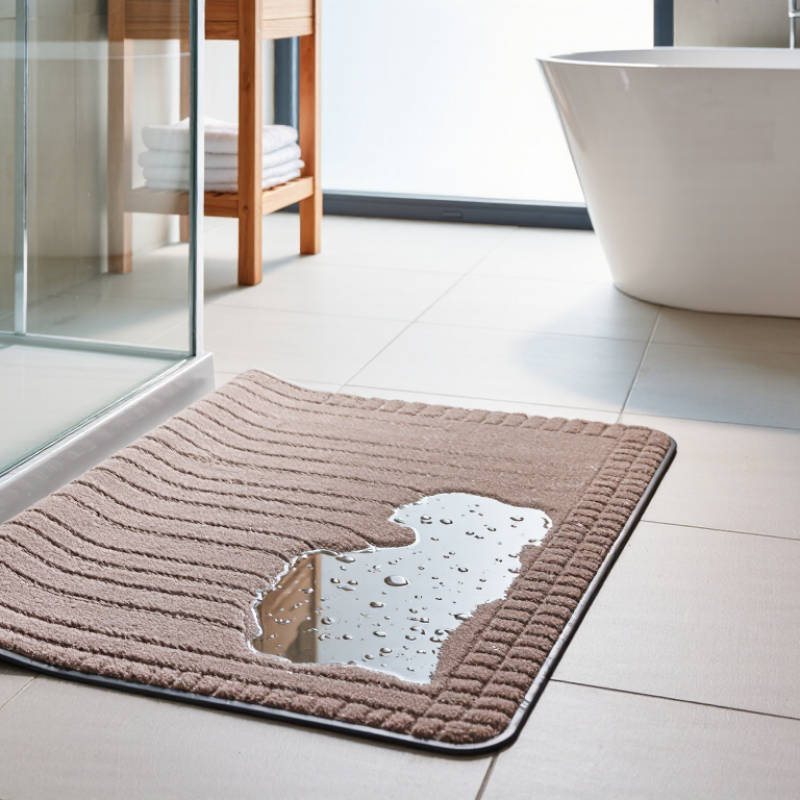
Define Fast Drying with ISO 17617 Moisture-Drying-Rate Data
A bath mat that feels dry on top may still hold moisture underneath. That is why “fast drying” needs more than a quick touch test. ISO 17617 provides a standardized way to determine the moisture-drying rate of textile materials. Its data can help compare mat fabrics under stated test conditions.
Check the report before comparing numbers. Look for the ISO 17617 method used, specimen details, and test conditions, such as temperature and airflow. Results are meaningful when samples have been tested on the same basis. A higher drying rate generally indicates faster moisture loss during that test. It does not guarantee the same result on a cold, poorly ventilated bathroom floor.
The whole mat matters. A dense pile, stitched layers, or water-resistant backing can slow drying, even when the face fabric performs well. Ask whether testing covered the textile alone or the assembled mat. Also check how much water the sample held at the start. There is a catch: standardized data improves comparison, but it cannot reproduce every home’s humidity or floor surface. I would treat the figure as useful evidence, not a promise. A mat can test well and still feel damp after a long shower.
Compare Materials Using AATCC TM201 Heated-Plate Drying-Rate Results
How to Choose the Best Fast Drying Bath Mat
AATCC TM201 uses a heated-plate method to compare textile drying rates under controlled conditions. When reviewing results, check whether samples share the same size, water load, and test conditions. A mat that loses water quickly in a lab may still dry slowly on a cold bathroom floor. The test helps compare materials; it does not recreate every home.
Fiber data adds context, but not a verdict. ASTM D1909 lists commercial moisture-regain values of about 8.5% for cotton and 0.4% for polyester. These figures describe moisture regain, not bath-mat drying time. Construction matters: dense cotton loops can hold more water than a thin, open weave, while backing may slow evaporation. Small details matter. Compare the TM201 report’s actual drying-rate results, not just fiber labels.
For a fair comparison, ask for the full test report, including replicate results and specimen descriptions. Look for consistent sample preparation and a clear endpoint. I would not overread one fast result; variation between samples can be meaningful. A mat should also feel stable underfoot and suit the room’s ventilation. Fast drying is useful, but a single laboratory number cannot settle the choice.
How to Choose the Best Fast-Drying Bath Mat
Use AATCC TM201 heated-plate testing to compare the drying rates of finished textile mats under the same test conditions. The chart below provides context using typical fiber moisture-regain values—not TM201 drying-rate results.
Typical fiber moisture regain (%): cotton 8.5, nylon 4.5, acrylic 1.5, and polyester 0.4. These are approximate reference values for fibers, not measurements of bath mats. Lower moisture regain alone does not prove faster mat drying: pile, thickness, backing, and construction also matter. For a fair product comparison, test finished mats using AATCC TM201 and report the measured drying rate.
Assess Fabric Airflow with ASTM D737 Air-Permeability Measurements
A fast-drying bath mat needs more than a soft surface. Air must move through its fabric so damp fibers can release moisture between uses. ASTM D737 measures air permeability by passing air through a textile under a controlled pressure difference. The result helps compare fabrics tested under the same conditions. More airflow can support evaporation, but it does not guarantee a shorter drying time.
Ask whether the test used the complete mat or only its top fabric. A dense pile, foam layer, or waterproof backing may restrict airflow. A sample that looks breathable on its own may behave differently when assembled. Details matter. Check the reported pressure setting, test area, and units, such as cubic feet per minute per square foot. Consistent methods make comparisons more useful.
Use D737 as one clue, not a final verdict. A mat’s drying also depends on thickness, water retention, room humidity, and ventilation. In a practical check, compare similar mats after applying equal amounts of water, then note how long they stay damp. That test is imperfect; water may spread unevenly. Still, paired with ASTM D737 results, it can reveal whether airflow figures match everyday performance.
Review Water Absorption, Backing Grip, and Care-Test Results
A fast-drying bath mat should absorb a splash without staying damp for hours. Compare products using the same test: pour a measured tablespoon of water onto each mat, then time how long the surface takes to look dry. For a more controlled check, AATCC TM79 is a textile test method that measures absorbency by timing how quickly a water drop disappears. Look for published test conditions, not just “quick-dry” claims. Small details matter. A thick pile may feel plush but hold moisture near its base, while a thinner weave can dry faster and feel less cushioned.
Grip needs a separate check. Place the mat on a clean, dry floor, then press and gently nudge it with your foot; repeat after dampening the floor underneath. This is not a certified slip test, but it can reveal curling corners or a backing that shifts. The National Floor Safety Institute estimates that slips and falls lead to more than one million U.S. emergency-room visits each year. That figure covers many settings, not bath mats alone, but it shows why backing performance deserves attention. Avoid assuming suction cups work equally well on textured tile and smooth floors.
Care-test results matter too. Wash and dry the mat as directed several times, then check for shedding, warped edges, lingering odor, and backing cracks. I would also note how long it takes to dry fully after laundering. One weak point in home testing: room airflow changes results. Record the conditions, and compare like with like.
How to Choose the Best Fast Drying Bath Mat - Review Water Absorption, Backing Grip, and Care-Test Results
Comparison note: The figures below are illustrative sample results for common bath-mat constructions, not independently verified product ratings. Results can vary with mat size, floor finish, humidity, and washing instructions.
| Mat construction |
Water absorbed
(g from 100 mL) |
Surface dry time
(minutes) |
Backing grip
(1–5) |
After 5 wash cycles |
Care considerations |
| Microfiber pile with rubber backing |
82 g |
35 |
4 |
Pile retained; backing slightly less flexible |
Machine-wash cold on a gentle cycle; air-dry to help protect the backing. |
| Chenille polyester with non-slip backing |
88 g |
48 |
4 |
Some pile compression; backing intact |
Shake out loose debris; avoid high heat unless the care label allows it. |
| Woven cotton with latex backing |
70 g |
72 |
3 |
Color remained stable; edges slightly curled |
Wash separately if new; dry thoroughly between uses to limit lingering dampness. |
| Low-pile polyester with TPR backing |
58 g |
28 |
5 |
Shape and backing remained consistent |
A practical option for quick surface drying; follow the label for machine washing. |
| Porous mineral (diatomaceous-earth style) |
35 g |
12 |
3 |
No laundering; surface needed light sanding in sample care check |
Wipe or rinse as directed; use a level, clean floor and check the mat for cracks. |
Sample test conditions: Water uptake was estimated by weighing each dry mat, applying 100 mL of room-temperature water to the center, and reweighing after 60 seconds. Surface dry time is the approximate time for the visibly wet area to feel dry to a light touch at room temperature. Grip is a comparative 1–5 sample scale on a clean, dry tile surface; it is not a safety certification. Care checks represent five cycles following typical label guidance.
Choose Mat Size and Construction for Bathroom Traffic and Laundering Needs
Choose a mat that covers the wet landing area without blocking the door or crowding the toilet. Measure the floor. A narrow mat may leave damp footprints beside it, while an oversized one can bunch under a swinging door. For a busy family bathroom, consider a longer mat near the shower and a smaller one by the sink. Check that it lies flat on your floor.
Construction affects drying and upkeep. Low-pile cotton often feels familiar and can be easier to wash, while some microfiber mats feel plush but may take longer to dry if they are thick. A thinner mat allows more air around its fibers, though it may feel less cushioned underfoot. There is a trade-off. Check the care label for washing and drying instructions, and make sure the mat fits comfortably in your machine. A bulky mat that needs special handling may sit damp in the laundry basket longer than expected.
Think about how often the room gets used. Several showers a day call for a mat that can be hung over a towel bar or dried between uses. A non-slip backing may help keep it in place, but backing materials vary, so follow the maker’s care guidance. It is easy to focus on softness and overlook laundering. That can be a mistake. A practical mat should fit the space, dry between uses, and survive the cleaning routine you will actually follow.