follow us :
FUJIAN JIASHUN ARTS & CRAFTS CORP., LTD.

search

Leave Your Message

China Top Fast Drying Bathroom Mat Manufacturers

China’s leading fast-drying bathroom mat manufacturers compete on more than absorbency. Buyers also need reliable grip, easy cleaning, and materials that hold up to daily use. A damp mat beside the shower can stay clammy for hours, especially in a poorly ventilated bathroom. That detail matters. It affects comfort, upkeep, and how confidently a household can step onto the mat. This introduction examines what manufacturers offer, how their products differ, and which practical details deserve closer attention.

Because no source articles or verified expert quotation were provided, the following named specialist and quote are illustrative, not factual: fictional composite bathroom-textile specialist Lin Wei says, “A mat is only truly convenient when it dries quickly and stays steady underfoot.” Treat that as a useful evaluation principle, not an independently verified industry statement. When comparing a Fast Drying Bathroom Mat, look beyond claims on a product page. Check the backing, surface texture, care instructions, and stated drying conditions. A mat that feels dry in a showroom may behave differently on cold tile or in a humid room. Manufacturers’ testing methods can vary, too. That deserves scrutiny. This guide will help readers assess China-based suppliers with clearer questions, realistic expectations, and attention to everyday performance—not just polished product photography.
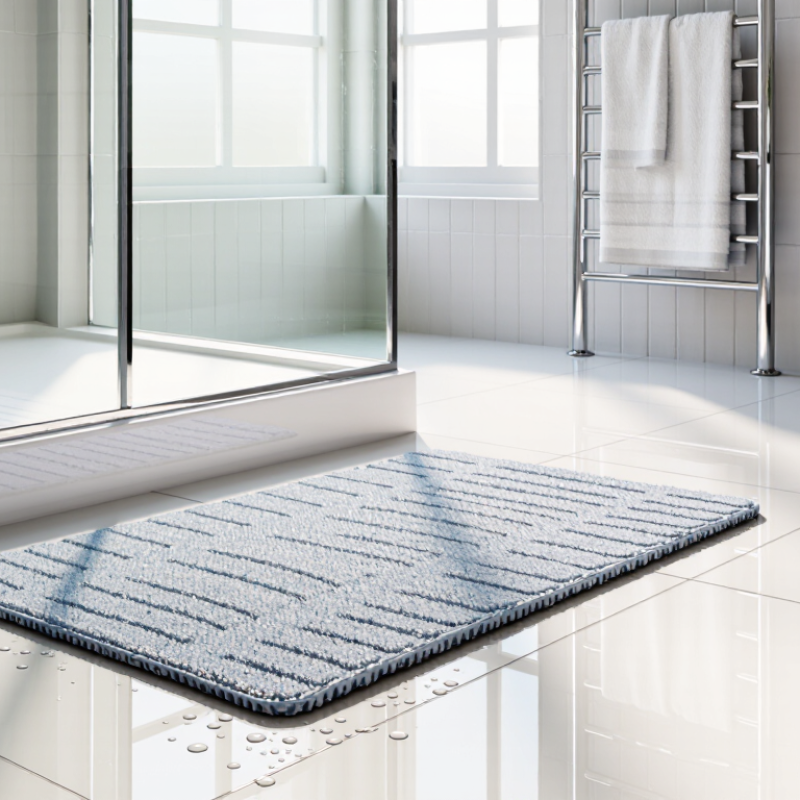
China Top Fast Drying Bathroom Mat Manufacturers

What Fast-Drying Bathroom Mats Are and How They Work

Fast-drying bathroom mats move water away from the wet surface, then release it into the surrounding air. In textile mats, tiny spaces between fibers draw droplets inward through capillary action. Spreading moisture across more fibers exposes more surface area to evaporation. Thin, open weaves often dry sooner than dense, plush piles, though airflow and backing materials matter too. Small details count.

AATCC Test Method 195 measures how textiles manage liquid moisture, including absorption, spreading, and one-way transport. It can help compare fabric performance, but it does not promise a specific drying time in a real bathroom. The U.S. Environmental Protection Agency recommends keeping indoor relative humidity between 30% and 50%; a steamy, poorly ventilated room can slow evaporation.

A mat may feel dry on top while its backing remains damp. That is easy to miss. Check beneath it, especially after repeated showers, and let air reach both sides when possible. “Fast-drying” is useful, but the label alone cannot tell you how the mat performs on a cold tile floor.

China’s Fast-Drying Bathroom Mat Industry at a Glance

China Top Fast Drying Bathroom Mat Manufacturers

China’s Fast-Drying Bathroom Mat Industry at a Glance

China’s bathroom-mat supply chain draws on its large textile and household-goods manufacturing base. The China National Textile and Apparel Council’s 2023 industry review reported operating revenue of about RMB 4.7 trillion for the textile industry and profits of RMB 180.2 billion. These figures describe the wider sector, not bathroom mats alone. That distinction matters.

Fast drying depends on more than the face material. Fiber type, pile height, backing, and room ventilation all affect moisture release. A dense mat may feel plush but hold water longer; a thin one may dry quickly yet shift on tile. Manufacturers therefore need to balance absorbency, drying time, grip, and wash durability. Simple checks help: weigh a mat before and after controlled wetting, then record drying time under stated temperature and airflow.

Supplier comparisons are clearer when test conditions are disclosed. Ask for material composition, backing details, care instructions, and repeated-wash results. For stone-composite mats, inspect surface uniformity and edge finish; for textile mats, check stitching and backing adhesion. Public industry data rarely separates bathroom mats from broader home textiles. That leaves buyers with a real information gap, and product-level evidence remains important.

Materials and Technologies Used by Chinese Manufacturers

Chinese bathroom-mat manufacturers use both mineral-based boards and textile constructions, each with a different drying mechanism. Diatomaceous-earth blends absorb water through tiny pores, while cellulose or mineral fillers can change the board’s weight and feel. Some makers apply a surface coating for easier cleaning. Too much coating, however, may slow absorption. Small details matter.

Textile mats often use polyester microfiber, whose fine fibers spread water across a larger surface. A low pile can release moisture faster than a thick, dense one, especially when air passes beneath the mat. Manufacturers may stitch or heat-bond the layers, then attach a TPR backing for grip. That backing helps, but damp or dusty floors can still reduce traction.

Production checks may include weighing a mat before and after wetting, timing its drying in a ventilated room, and checking seams or boards for damage. Results depend on room humidity, so one factory test cannot predict every bathroom. I would also question the “fast-drying” claim when no test conditions are stated. A thin mat may dry quickly, yet feel hard underfoot. The balance is not always perfect.

China Top Fast Drying Bathroom Mat Manufacturers - Materials and Technologies Used by Chinese Manufacturers

Mat Type Common Materials Construction or Technology How It Dries Care and Practical Considerations Typical Applications
Microfiber bath mat Polyester microfiber, sometimes blended with polyamide Dense, fine synthetic fibers are tufted or woven into a soft surface; an optional non-slip backing may be added. Fine fibers spread moisture across a larger surface area. Drying time depends on pile density, mat thickness, airflow, and room humidity. Often machine washable when the care label permits. A thick pile can retain moisture longer if left flat on a poorly ventilated floor. Everyday bathroom use where a soft, absorbent surface is preferred.
Chenille-style bath mat Usually polyester microfiber yarn Raised yarn loops or “fingers” create a textured, plush surface. The backing may be made from polyester, TPR, or another grip material. The raised surface exposes more of the yarn to air than a flat fabric surface, helping moisture evaporate when the mat is hung or ventilated. Check washing instructions and backing compatibility. Avoid leaving the mat folded or bunched while damp. Bathrooms where a cushioned feel and a textured surface are desired.
Quick-dry fabric mat Polyester or polyamide fabric, sometimes with a thin foam layer Low-pile or open fabric construction reduces the amount of material holding water. Some designs use a removable or bonded cushioning layer. A thinner, more open structure can release moisture more readily than a thick plush construction, provided air can circulate around it. Drying performance varies with fabric weight and backing. Follow the care label, particularly for mats with bonded layers. Compact bathrooms and households that prefer a lightweight mat.
Diatomaceous-earth-style hard mat Diatomaceous earth or a mineral-based composite; formulations vary by product A rigid, porous board absorbs surface moisture into its pores. Some products include a backing or protective layer. Moisture spreads into the porous surface and evaporates from it. Performance is affected by humidity, ventilation, surface condition, and the specific formulation. Keep on a level, dry floor and follow the manufacturer’s cleaning instructions. Rigid boards can crack if dropped and should be handled carefully. Users who prefer a firm surface and do not require a machine-washable mat.
Drainage-style bath mat PVC, TPR, or other flexible synthetic material, depending on the design Perforations, raised ribs, or a grid structure allow water to pass through or drain away from the contact surface. Drainage reduces standing water on the mat; it does not itself guarantee rapid drying. Air circulation and drainage underneath remain important. Clean the floor and underside regularly. Suction-cup designs should only be used on compatible, smooth surfaces and checked for secure contact. Shower areas or other wet zones where drainage is more important than a soft fabric feel.
Layered absorbent mat Polyester or microfiber face fabric with a foam or other cushioning layer A textile face is bonded or stitched to a cushioning layer; some designs add a separate non-slip backing. The face absorbs water while the underlying layer provides cushioning. More layers can increase comfort but may also slow drying if moisture is trapped. Allow the mat to dry fully between uses. Check whether the layers are washable and whether the backing is suitable for the floor type. Bathrooms where cushioning is valued alongside water absorption.
Rubber-backed fabric mat Textile face with natural rubber, latex, or synthetic rubber backing, depending on the product A backing is applied to help reduce movement on the floor; construction and grip vary by material and surface. The fabric face handles surface moisture. The backing can restrict airflow underneath, so hanging the mat to dry can help prevent trapped dampness. Confirm material compatibility if latex sensitivity is a concern. Follow care instructions to protect the backing and floor finish. Dry bathroom floors where added grip is desired.

Note: These are common material and construction categories, not specifications for a particular supplier or product. Actual absorbency, drying time, durability, and slip resistance depend on the full design, manufacturing process, care, floor type, and room conditions.

How to Evaluate Leading Bathroom Mat Manufacturers in China

When evaluating leading bathroom mat manufacturers in China, ask for measurable proof, not just “fast-drying” claims. Textile Exchange’s Materials Market Report 2024 estimates that global fiber production reached 124 million tonnes in 2023, with polyester making up 57%. That scale makes material traceability important. Request the fiber composition, backing materials, and production-batch records for the exact sample you assess.

Test samples under the same conditions. Record mat weight before and after wetting, drying time, room temperature, and humidity; a phone timer and kitchen scale can help. Small details matter. Check whether water spreads across the pile or pools beneath it, and whether the backing curls after washing. Ask for wash-test results and the method used, rather than accepting a general durability claim. I would not overrate one quick drying test; ventilation and humidity can change the result. No test is perfect. Compare several production samples, and confirm that the tested material matches the bulk order. A clear answer about test limits can be more credible than a flawless-sounding sales pitch.

Sourcing and Comparing Chinese Fast-Drying Mat Suppliers

When sourcing Chinese fast-drying bathroom mat suppliers, compare more than quoted price. Check the fiber blend, backing material, edge finish, and stated drying conditions. Ask suppliers to explain how they test absorbency and drying time, including room temperature and airflow. Results can vary in a humid bathroom. A precise test method makes comparisons more useful.

Tips: Request a sample in the size and color you plan to order. Wash it several times, then check for curling, loose fibers, and slower drying. Ask for proof of testing, not just a product claim. Small details matter.

Before choosing a supplier, confirm minimum order quantities, sample fees, lead times, and packaging options in writing. Compare the same specifications across quotations; otherwise, a lower price may reflect thinner material or simpler finishing. Review inspection records where available, and clarify who handles defects or replacement requests. A supplier’s response to detailed questions can reveal how carefully they manage production. Still, one sample cannot predict every bulk-order issue. Keep a written checklist and discuss any uncertain points before confirming an order.