Leave Your Message
Global buyers are revisiting a simple question: which suppliers can deliver Earthen Pots that perform reliably beyond the sample stage? Demand for ceramic and traditional tableware is shaped by changing dining habits, home décor, hospitality purchasing, and interest in handmade finishes. Grand View Research’s Ceramic Tableware Market analysis provides useful context on this wider category, though its market estimates do not isolate earthen cookware. That distinction matters. A broad market forecast cannot prove that a specific pot is food-safe, durable, or suitable for direct heat.
For 2026 sourcing, supplier selection should go beyond attractive glaze and a low quotation. Buyers need clear material specifications, production capacity, sample consistency, packaging details, and realistic lead times. Ask how the maker controls wall thickness, checks each firing batch, and protects fragile rims during shipment. Small details count. A sturdy carton and a traceable quality process can matter as much as a beautiful finish. UN Comtrade trade data can help buyers examine product-level trade patterns, but customs classifications may group earthenware with other ceramic goods. The numbers need careful interpretation.
This guide introduces leading Earthen Pots suppliers for global buyers and highlights practical checks for comparing them. Supplier claims should be verified against samples, written specifications, and documented testing where relevant. Handmade variation can be part of the appeal, but it can also complicate repeat orders. That is an honest limitation, not a flaw to hide. The right partner depends on intended use, order volume, target market, and tolerance for natural variation.
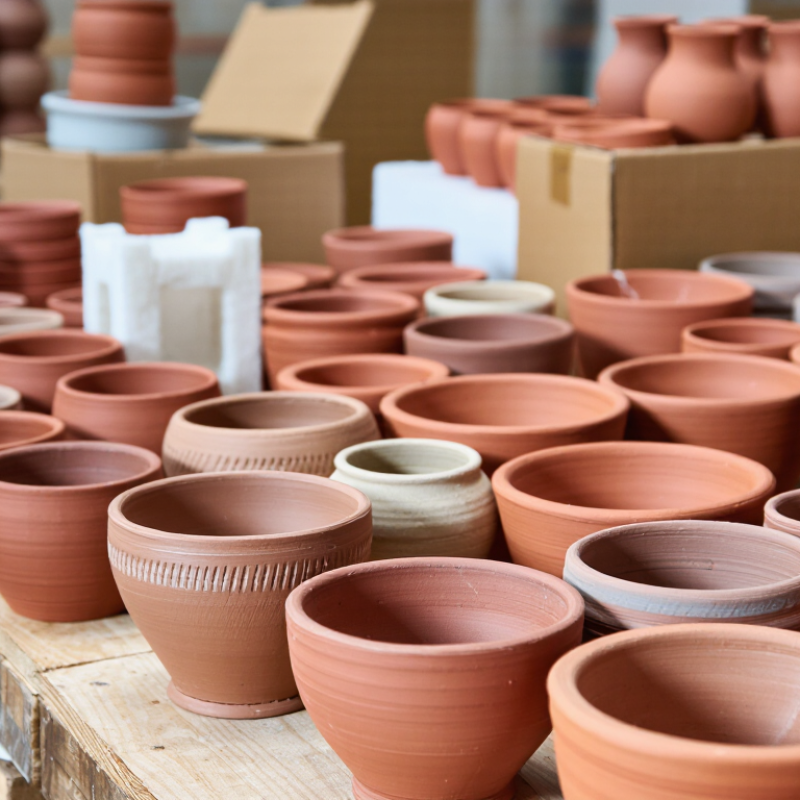
Earthen pots are vessels made from natural clay, shaped by hand or on a wheel, then hardened with heat. Their familiar reddish, brown, or buff tones come from clay minerals and firing conditions, not paint alone. A potter removes stones, adds water, and kneads the clay until it feels even and workable. The body is then formed, trimmed, and dried slowly. Drying matters. A damp base can crack when the surface feels ready. The U.S. Geological Survey’s Mineral Commodity Summaries 2024 estimates more than 20 million metric tons of U.S. common clay and shale production in 2023. That broad figure covers many uses; it does not measure pottery clay alone.
After drying, pots are fired in a kiln, often at temperatures selected for the clay and intended use. Heat drives out remaining moisture and changes the clay body into a rigid ceramic. Some makers apply a mineral glaze before a second firing; unglazed pots retain a more porous surface. This can help with certain cooking traditions, but it may also make cleaning and moisture control less straightforward. Details vary by workshop. A thick rim, uneven wall, or rushed firing can affect strength, even when the pot looks sound. Buyers should ask suppliers about clay source, firing practice, and whether a pot is intended for food preparation. One detail is easy to overlook: handmade variation is real, but it should not excuse poor workmanship.
Earthen pots are ceramic vessels made from clay and fired at relatively low temperatures compared with stoneware and porcelain. The sourcing regions below are examples of established pottery-producing markets, not a ranked supplier list.
| Product category | Examples of sourcing regions | Material and forming methods | Typical firing and finish | Common uses | Buyer checks |
|---|---|---|---|---|---|
| Unglazed terracotta planters | Examples include India, China, Italy, Portugal, and Mexico. | Porous, iron-bearing clay; commonly wheel-thrown, molded, or mechanically pressed. | Usually low-fired; many pieces remain unglazed and porous. Exact firing conditions vary by clay body and producer. | Gardens, patios, and indoor plant displays. | Check dimensions, drainage-hole size, rim consistency, breakage rate, and suitability for local freeze–thaw conditions. |
| Cooking pots and casseroles | Pottery-producing markets in South Asia, East Asia, the Mediterranean, and Latin America. | Earthenware clay shaped by hand, on a wheel, or in a mold; some designs use a fitted clay lid. | Firing and surface treatments differ by product. Food-contact suitability should be confirmed, especially for glazed interiors. | Traditional cooking and serving, where the pot is designed and tested for the intended heat source. | Request food-contact documentation, heat-use instructions, glaze-leaching test results where applicable, and guidance on thermal shock. |
| Water storage and cooling pots | Examples include producers in India, Bangladesh, Pakistan, and parts of Africa and the Middle East. | Often unglazed clay; traditional hand-building and wheel-forming are both used. | Typically fired earthenware. Porous walls can allow slow evaporation, which may cool water in suitable conditions. | Household water storage and serving. | Confirm intended water use, cleanability, capacity, leakage expectations, and applicable local safety requirements. |
| Decorative and tableware pots | Examples include China, India, Portugal, Italy, Mexico, and other ceramic-producing regions. | Clay bodies may be hand-built, wheel-thrown, slip-cast, or press-molded; decoration can be applied before or after firing. | May be unglazed, engobed, or glazed. Glaze and firing specifications vary by design and intended use. | Home décor, tabletop display, and serving when certified for food contact. | Approve production samples, color and finish tolerances, packaging tests, and food-contact documentation if relevant. |
| Production stage | What happens | Useful buyer specification |
|---|---|---|
| 1. Clay preparation | Clay is selected, cleaned or screened, and mixed with water to reach a workable consistency. Some bodies include additives to adjust workability or drying behavior. | Specify the intended use, color range, and acceptable variation in natural clay. |
| 2. Shaping | The prepared clay is formed by hand-building, wheel-throwing, molding, or pressing, depending on the design and production scale. | Provide drawings with dimensions, wall-thickness expectations, capacity, and any required drainage or handle details. |
| 3. Drying and finishing | Pots are dried to reduce moisture before firing. Edges may be trimmed, surfaces smoothed, and decorative coatings or glazes applied. | Agree on surface finish, color tolerance, dimensional tolerance, and whether minor handmade variation is acceptable. |
| 4. Firing | Dried pieces are fired in a kiln. Earthenware is generally fired at lower temperatures than stoneware and porcelain; the precise schedule depends on the clay body, kiln, and glaze. | Request the supplier’s firing and quality-control specifications; confirm the product’s intended use rather than relying on a generic temperature range. |
| 5. Inspection and packing | Finished pots are checked for defects and sorted before protective packing. Ceramic goods need packaging that limits impact and movement in transit. | Set acceptable defect levels, inspection criteria, carton specifications, drop-test expectations, and export documentation requirements. |
Note: Earthenware properties vary with clay composition, forming method, firing, and finish. Confirm product-specific performance, safety, and compliance requirements with the supplier before placing a commercial order.