Top 10 Kitchenware Sets for Every Budget?
A crowded kitchen does not need a crowded cupboard. The right Kitchenware Set should match how you cook, how often you cook, and how much storage you have. A beginner in a small apartment may value stackable pans and a useful range of sizes. A busy family may need durable handles, easy cleanup, and pieces that handle daily meals. There is no universal winner.
Alton Brown, chef and food-science educator, is often quoted saying, “The only unitasker allowed in my kitchen is a fire extinguisher.” It is a playful reminder to check whether each piece earns its space. Still, a specialized pan can be worthwhile if you use it often. That trade-off matters.
This guide compares ten kitchenware sets across different budgets, from practical starter bundles to premium options. We look at materials, included pieces, care requirements, and everyday versatility—not just polished product photos. A low price can hide thin construction; a high price does not guarantee a better fit. We also consider what may be missing, because sets sometimes include pieces buyers rarely use. Small details matter: a lid that fits securely, a pan that feels balanced, and storage that does not become a daily nuisance. Use the comparisons as a starting point, then match the set to your habits and kitchen. No set is perfect.
Kitchenware Set Basics: Components, Materials, and Construction
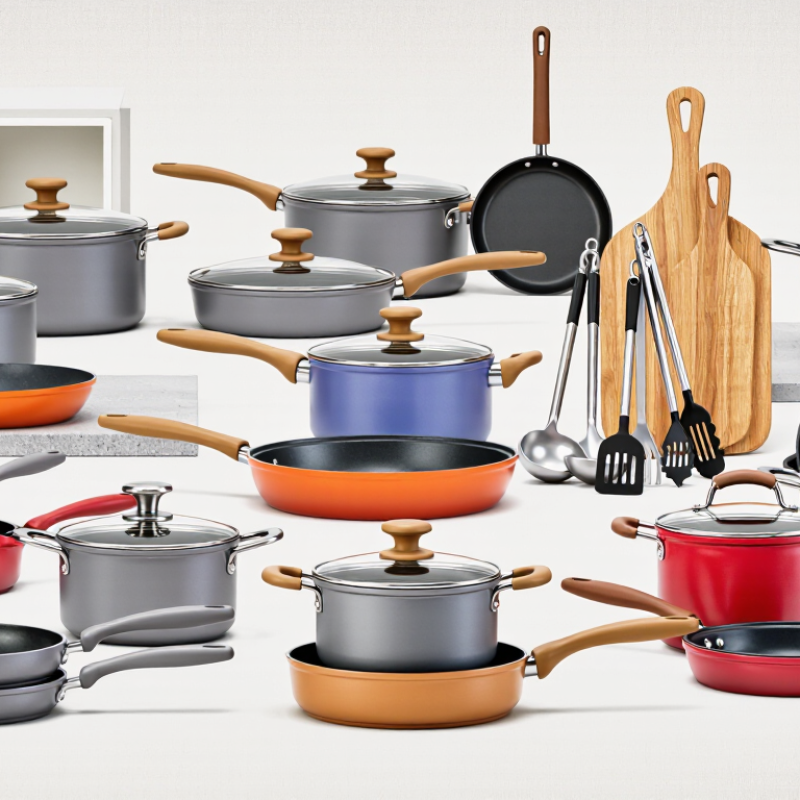
A kitchenware set is more than a stack of pots. Check which pieces you will actually use: a small saucepan, a lidded stockpot, and two skillets cover many everyday meals. Grand View Research valued the global cookware market at $29.71 billion in 2023 and projected 6.7% annual growth through 2030. Fortune Business Insights estimated $27.87 billion for 2023, with a 4.5% forecast compound annual growth rate through 2032. Different scopes produce different estimates; market growth does not prove that a set is well made.
Material shapes the cooking experience. Stainless steel resists rust and handles browning well, but food may stick without enough oil or heat control. Aluminum heats quickly; a thick base can help reduce hot spots. Nonstick surfaces release delicate foods easily, though rough utensils can shorten their useful life. Construction matters, too: inspect riveted handles, tight-fitting lids, smooth rims, and flat bottoms. A heavy pan may feel reassuring, but it can also be tiring to lift. That trade-off is easy to miss.
Tips: Match the set to your cooktop, storage space, and usual recipes. Look for clear care instructions and check whether lids and handles feel secure. If possible, lift a sample pan. Small details matter. A set can still feel mismatched in daily use, even when its pieces look coordinated.
How to Compare Kitchenware Sets Across Budget Levels
Compare kitchenware sets by what you will actually use, not by the number of pieces in the box. A low-cost set may cover basic pots and pans, but check whether the handles feel secure and the lids fit snugly. Look for clear care instructions and materials suited to your stove. Looks can mislead.
In the middle price range, compare construction, weight, and useful extras. A thicker base may heat more evenly, while a comfortable handle can make a full saucepan easier to lift. Check whether the set includes sizes you cook with regularly. Six practical pieces may serve you better than twelve awkward ones. That matters.
At higher prices, ask what justifies the added cost: durable materials, replaceable lids, longer coverage, or better repair support. These features can help, but they do not guarantee a set will suit your kitchen. Measure cabinet space and consider whether the cookware is dishwasher-safe, if that convenience matters to you. It is easy to overvalue a polished finish and overlook daily upkeep. I would compare the care requirements with your routine, because a beautiful pan that needs constant attention may stay unused. Read the warranty terms carefully, and treat vague claims about performance with caution.
Top 10 Kitchenware Sets: Comparing Budget Levels
Typical U.S. retail price bands for multi-piece kitchenware sets, from starter options to high-end collections.
These approximate price ranges are for comparison only. Actual prices vary by materials, set size, included pieces, and retailer.
Durability, Maintenance, and Everyday Performance
Top 10 Kitchenware Sets for Every Budget?
Durability, Maintenance, and Everyday Performance
A kitchenware set earns its place through repeated use, not its display on a shelf. Check that pot handles feel secure and lids sit evenly before buying. A flat, sturdy base helps distribute heat across the cooking surface. That matters when simmering soup or frying eggs on a busy morning. Small details count.
Maintenance varies by material. Stainless steel can handle frequent use, but stuck-on food may need soaking instead of harsh scrubbing. Nonstick surfaces are easier to clean, though metal utensils can scratch their coating. Cast iron can last for years with proper seasoning, but it needs prompt drying to limit rust. Read care instructions carefully. They are easy to overlook.
For everyday performance, consider the pieces you actually reach for: a medium saucepan, a useful skillet, and a pot large enough for pasta. More pieces do not automatically mean better value. It is tempting to choose the cheapest set, then discover its pans heat unevenly or its handles feel awkward. I would also leave room for personal preference; a pan that feels heavy to one cook may feel reassuring to another. Test the grip if possible, and choose cookware you can maintain on an ordinary weeknight.